| ||
| Visit MustangSteve's web site to view some of my work and find details for: FYIFORD Contributors' PICTURES - Power Brake Retrofit Kits for 65-66 Stangs - Classic Mustang FAQ's by MustangSteve - How to wire in a Duraspark Ignition - Mustang Ride Height Pictures and Descriptions - Steel Bushings to fit Granada Spindles to Mustang Tie Rods - Visit my EBAY store MustangSteve Performance - How to Install Granada Disc Brakes MustangSteve's Disc Brake Swap Page - FYIFORD Acronyms for guide to all the acronyms used on this page - FYIFORD Important information and upcoming events |
1 of 1
Offline
Hi All,
I noticed on my 302 while doing a cooling system leak repair that a decent amount of brown sludge like stuff formed on the Temp Sensor.
Then after that during a rad refill I found some sludge (minimal) there but what stood out were chunks of some material lodged into multiple fins.
I took pictures and will post. I was able to use a magnet to pull some pieces out which clearly shows its metal/rust.....to which I don't understand where it would be coming from


Offline
Brown is typically iron. Was the water in the system well water? I clean stuff that looks exactly like that out of my well filter and the flow meters for my geothermal systems. My water is actually soft, but it is full of iron. You can't see or taste the iron, and the water never looks brown, but its there nonetheless.
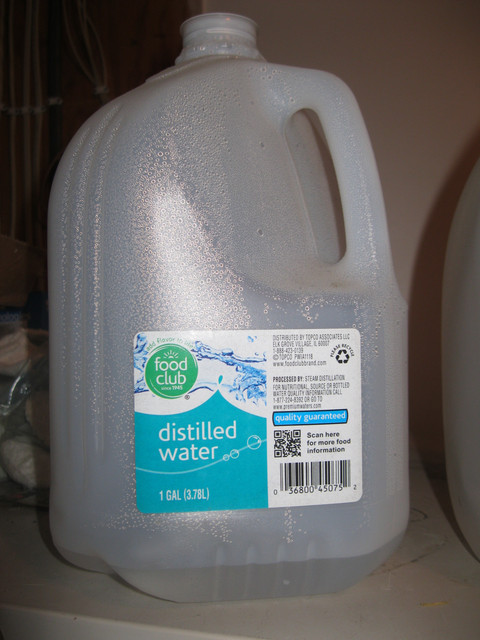
This is why I only use distilled water in the cooling systems of my vehicles.
Offline

Google citrus flush for auto rads.
Offline

Was anti-freeze used?
If so, how old was it?
As TKO indicated, there is some iron in water, more in some locales then in others. Also, the block is iron and can create rust.
Years ago, I had a Ford 390 FE motor where the block drains were at the rear of the block. I installed ¼” brass elbows and copper tubing that was routed to the front of the engine for a more easily accessible way to drain the block. These lines got clogged with “sludge” like you describe. I was told it was likely the galvanic action between the dissimilar metals. I ended up removing the copper tubing, problem solved.
Offline
BobE wrote:
Was anti-freeze used?
If so, how old was it?
As TKO indicated, there is some iron in water, more in some locales then in others. Also, the block is iron and can create rust.
Years ago, I had a Ford 390 FE motor where the block drains were at the rear of the block. I installed ¼” brass elbows and copper tubing that was routed to the front of the engine for a more easily accessible way to drain the block. These lines got clogged with “sludge” like you describe. I was told it was likely the galvanic action between the dissimilar metals. I ended up removing the copper tubing, problem solved.
Typically on an engine build I put petcocks in the block drains as you described. Good quality brass ones are reasonably cheap and make future flushes much easier that trying to remove a rusty Allen head plug or old school square topped plug. I use Fumoto drain valves on my 6.0 Diesel due to the block plugs being an odd metric size. Of course that block hold about as much coolant as the entire cooling system in one of our Mustangs.
Offline
Thanks everyone for the responses.
I used the classic and tradition coolant; the same stuff that's been used in NA cars since the 70s or earlier.
My water is my hose water, but I had a dual cartridge filter to remove a plethora of chemicals. I'm unsure if that helps or matters, but if there is a specific product to use because it is fundamentally good and yields a positive result, I will do it!!
In the past 6yrs I've done 2 flushes, only cause I've done work and the system get opened.
Rudi mentioned Citrus Flush, anyone else have anything? Also, how/where do I do a mod to help flush the block? (Can Anyone send pics?)
Offline
When filling any automotive cooling system I only use distilled water (available at any grocery store, not expensive) mixed with full strength coolant of the appropriate type (regular old green for these cars). I don't use the premixed coolant, because I have no idea what they are using for water when they mix it. What happens in terms of sludge formation is that whatever minerals are in the water precipitate out due to the constant thermal cycling of the coolant. The only way to prevent this is to start with water that is mineral free.
Some coolants on their own can also have this issue, but typically its silicates, not iron, and silicates don't form brown sludge.
Another possibility, that you'll solve with flushing, is that someone in the past may have used straight water in the cooling system, and the iron could be rust from inside the cooling jacket. Anytime straight water is used you are supposed to use an additive package to prevent rust and lubricate the water pump, etc. Most people forget or don't know about this.
I learned about all of this working on Ford 6.0 Diesels. Ford filled these engines with the wrong coolant from the factory (the same GO5 they put in everything, which is not a Diesel rated coolant). Due to the complexity of the head castings there is always some amount of leftover casting sand in them. IH put a coolant filter on the engine during the design phase, but Ford eliminated it to save cost. Coolant filters are common on medium and heavy duty Diesels. The leftover sand would combine with silicates precipitated out of the coolant and create snot that would then clog the water/oil oil cooler. This would cause the oil temperature to spike during high load conditions (this was the sign something was wrong). If left uncorrected it would eventually cause the EGR cooler (another terrible piece of engineering) to fail and leak coolant into the EGR system, and the intake manifold. That coolant would then get into the cylinders, eventually causing a head gasket failure. Something as seemingly unimportant as coolant led to these engines having a bad reputation for reliability. If you simply use a real Diesel coolant 50/50 with distilled water, install a coolant filter, and get rid of the EGR cooler the engine becomes decidedly reliable. I put 300k miles on mine, the last 180k of that making 660HP and 1,000 lbs/ft before a HG failure not caused by the typical culprits led to my current engine/truck build.
Offline
TKOPerformance wrote:
When filling any automotive cooling system I only use distilled water (available at any grocery store, not expensive) mixed with full strength coolant of the appropriate type (regular old green for these cars). I don't use the premixed coolant, because I have no idea what they are using for water when they mix it. What happens in terms of sludge formation is that whatever minerals are in the water precipitate out due to the constant thermal cycling of the coolant. The only way to prevent this is to start with water that is mineral free.
Some coolants on their own can also have this issue, but typically its silicates, not iron, and silicates don't form brown sludge.
Another possibility, that you'll solve with flushing, is that someone in the past may have used straight water in the cooling system, and the iron could be rust from inside the cooling jacket. Anytime straight water is used you are supposed to use an additive package to prevent rust and lubricate the water pump, etc. Most people forget or don't know about this.
I learned about all of this working on Ford 6.0 Diesels. Ford filled these engines with the wrong coolant from the factory (the same GO5 they put in everything, which is not a Diesel rated coolant). Due to the complexity of the head castings there is always some amount of leftover casting sand in them. IH put a coolant filter on the engine during the design phase, but Ford eliminated it to save cost. Coolant filters are common on medium and heavy duty Diesels. The leftover sand would combine with silicates precipitated out of the coolant and create snot that would then clog the water/oil oil cooler. This would cause the oil temperature to spike during high load conditions (this was the sign something was wrong). If left uncorrected it would eventually cause the EGR cooler (another terrible piece of engineering) to fail and leak coolant into the EGR system, and the intake manifold. That coolant would then get into the cylinders, eventually causing a head gasket failure. Something as seemingly unimportant as coolant led to these engines having a bad reputation for reliability. If you simply use a real Diesel coolant 50/50 with distilled water, install a coolant filter, and get rid of the EGR cooler the engine becomes decidedly reliable. I put 300k miles on mine, the last 180k of that making 660HP and 1,000 lbs/ft before a HG failure not caused by the typical culprits led to my current engine/truck build.
Coolant is especially important in diesels due to cavitation, which over time can erode surfaces and cause failures. It's pretty common on cylinder liners.
Offline

I agree with using distilled water (it will say distilled water on the label). The distilled water is pure and has no minerals at all. Around here it's about a dollar a gallon and it comes in those translucent plastic jugs.
Last edited by John Ha (11/09/2026 10:02 AM)
1 of 1
| REMEMBER!!! When posting a question about your Mustang or other Ford on this forum, BE SURE to tell us what it is, what year, engine, etc so we have enough information to go on. |